
1940s Hats: Wartime Style, Hollywood Influence & the New Look

Meaghan Armstrong- Milliner/Millinery Historian

The 1940s were a remarkable decade for millinery. Hat styles exploded with variety and creativity. Since the beginning of the century, advances in technology and faster global travel had steadily expanded the range of materials available to milliners, and even during the second world war this remarkable variety continued.

In the first half of the decade especially, hats became a creative counterpoint to increasingly practical clothing. Bright accessories were often viewed as morale boosters, bringing colour and individuality into daily life during a difficult period. During this time, many milliners embraced the idea that hats should brighten both the face and the spirit.

Hats became far more than simple accessories. In a time shaped by hostilities, uncertainty, restrictions, and enormous social change, they offered women a means of expressing individuality, optimism, glamour, and even defiance.
Yet this atmosphere also created the conditions for extraordinary creativity among some of the most celebrated milliners in history. Working with limited supplies, these innovators produced hats in an astonishing range of shapes and designs.


More broadly, these changes in millinery also reflect a wider transformation taking place across society.

The serviceable, day wear of dark coloured suits, the narrower skirts with menswear tailoring and serviceable shoes was accented with colourful hats, scarves, gloves and purses.

Even in the Hollywood golden age where colourized movies were becoming more common as well as better technology to have full colour photographs for magazines seemed to re-instate this practical day wear.
Within that pragmatic framework, colour became one of the most expressive elements of dress.

Hat colours during the 1940s were bold and constantly changing with the seasons. Spring and summer favoured vivid shades such as red, orange, pink, lime green, yellow, and bright blue, while autumn and winter brought deeper tones like navy, burgundy, brown, dark green, and black. Against these darker winter wardrobes, more adventurous women often added striking accessories in red, cream, or warm sand tones.

Each season also introduced fashionable new suit colours intended to refresh the wardrobe. Bright accessories, however, remained popular throughout most of the decade, softening only occasionally for weddings and in the later 1940s, when pastel shades became fashionable.
This raises an important question about how these fashions were sustained during a period of wartime restriction.
But what about supply shortages and rationing? Canada didn’t have clothing rationing, and although Canadians didn’t experience the same level of restriction as people in Britain, they were deeply invested in the collective war effort. The “make do and mend” mentality was widely adopted here, even without formal clothing rationing.

Britain, of course, experienced strict rationing on everything and the make do and mend movement started in 1942. Launched in conjunction with the Board of Trade and voluntary groups including the Women's Group on Public Welfare, the Women's Institute, or the WI, and the National Council of Social Services to teach mending and re-purposing skills to encourage and help British citizens extend the use of their clothing. The women’s institute and the women’s’ volunteer service in England, taught people these skills as well as re-purposing men’s suits to be as women’s or children’s clothing. Blankets into coats and knitting and crochet skills.
These differences in policy had very real effects on what materials were available to milliners. Even so, by the end of 1941, silk had largely disappeared from the Canadian market, and imported materials such as Italian straw became increasingly scarce as trade routes were disrupted. At the same time, Canada’s textile and clothing industries remained relatively stable. Many factories and fiber producers shifted partially or fully toward wartime production, manufacturing uniforms and essential military goods such as tents, packs, and related equipment. As a result, everyday access to traditional millinery materials began to change.

Feather and chenille Bees for millinery
These restrictions created conditions in which do-it-yourself millinery could flourish. Canadians used the materials and instruction available to them to turn thrift into creativity and, at times, creativity into joyful hats.

Suppliers responded with alternatives to traditional materials, offering raffia, peanut straw, and wired and stiffened lace in place of fine Italian straw.

Yet when we look closely at women’s hats outside military headwear, it can be surprisingly difficult to see the effects of an increasingly diminished supply chain. The variety, enthusiasm, and ingenuity of millinery remained obvious and became central to the visual identity of the decade. Fashion in the postwar years moved at a slower and oddly inclusive pace, shaped in part by the lingering effects of the war. The growing do-it-yourself movement and the availability of basic millinery supplies in stores at all price points only reinforced this adaptability.
Decorations were affected by the disruption as well. Fine milled ribbons and veiling from France were replaced by products from North American manufacturers. Feathers, an integral part of millinery, underwent a dramatic change. In 1941, the National Audubon Society and the Feather Industries of America succeeded in banning the use of wild feathers in millinery.

Victorian taxidermy exotic bird for millinery
Farmed feathers became the primary new source, while feathers from old hats could be reused, a practical solution as exotic varieties became increasingly scarce.

As the decade progressed, feathers became less dominant as a decorative element, while fur gained popularity, particularly in Canada where fur was a major industry.
Modern goose feathers
The slower pace of fashion also helped women adapt to these changes. Hat styles did not fall out of favour as quickly as they had in previous decades, and when a new shape became fashionable, it often remained popular for some time. Women could therefore remain stylish for longer without feeling quite so quickly outdated or socially excluded.
At the same time, the war brought about a much larger shift in the fashion world. When the Nazis invaded Paris, the traditional centre of fashion was disrupted and attention shifted toward America. New York emerged as the country's major fashion centre, supported by its garment district and vibrant cultural life, while Hollywood was becoming an increasingly powerful influence on what women wore.
The movie studios were producing hundreds of films, and their stars became style authorities.

What appeared on screen quickly found its way into dress shops and department stores, often modified to suit local tastes and budgets but still recognizably drawn from the pages of magazines such as Photoplay and Movie Stars Parade.
Costume designers such as Edith Head rose to the occasion of being style leaders and created fashions for film that are drool worthy examples of Hollywood glamour. The dramatic silhouettes seen in film were complemented by equally dramatic and expressive accessories.

Edith Head costume design 1940s
Hats on film were bold statements of strength, beauty and confidence, reflecting the fashions and women’s new role in the workforce. Many of these hats onscreen were large, had protruding angled brims, conspicuous feathers, abundant veils or hoods and towering heights that hadn’t been seen in millinery since the aughts of the early century and the Edwardians.

Anna Mae Wong


These millinery fantasies of Hollywood were translated by hat makers, both for large companies and small studios, into more wearable versions for the everyday woman. The drama was still there, but softened and adapted to ordinary life.
These subtler interpretations of Hollywood extravagance came in a dizzying variety: boaters, upturned sailors or bretons, pancake berets, knit turbans, cartwheels, tricorns, toques, pompadours, doll hats, fedoras, bonnets, bowlers, chaplets, curvettes, pillboxes, tams, suitor hats, cloches, calots, puff hats, Dutch hats, snoods and headscarves.

Many of these shapes were reiterations of styles from previous decades, but filtered through a world transformed by war. The same sense of adaptation carried into the everyday hats worn by women throughout the decade. Rather than abandoning familiar shapes, milliners revised them—sometimes subtly, sometimes dramatically—to suit the changing materials, fashions and circumstances of the 1940s.

The beret is perhaps the clearest example of this process.The 1920s had cemented the smaller French-style beret in fashion, but the 1940s version was essentially a further revision of the shape that had emerged in the late 1930s.

It sat flatter against the head and was usually worn at an angle, often pulled down over one eye. Its shape was built into the construction itself, with stitching creating a back crown section that helped anchor the hat while the front and side sections tucked underneath.
These berets were more oval in shape, retaining the structure developed in the late 1930s. They also made excellent canvases for brooches and other removable decorations, allowing the wearer to change the look of the hat without changing the hat itself.

Alongside this, other soft structured hats remained equally important in everyday wear.
The Tam-o-shanter was still available and was bigger than the 30s designs. The difference from the previous 3 decades was that the tam was worn deeply, as in decade like the aughts but it was also angled to either side. Worn at the front of the head, below or at the hairline or at the back of the head to frame the popular hairstyles. Most tam-o-shanters of the 40s were made of felt but summer straw and fabric yardage to make cut and sew versions were popular, especially with the DIY crowd.

The reinvention of the sailor and skimmer hats for the 1940s had a shallower crown than their previous versions like in the 1920s but were still decorated with wider ribbons and bows.


A different but equally important influence came from historical revival styles, particularly through film.

Victorian style influenced movies, both as period films of Charles Dickens greatest novels or musicals like Gaiety George. This genre of films affected hats almost more than the clothing.
The Cartwheel Hat

A popular Victorian style is the cartwheel and it re-emerged in the middle to the end of the 1940s.

At first these arrived as summer straw with stiff and oversized brims. As the popularity of these hats grew colder weather versions in wool felt or velvet were made. They were lacking in decoration throughout the 40s and it was in the 1950s before the cartwheel became a platform for ornament.
Another Victorian era inspired design was the bonnet hat. It had a semi-deep crown worn at the centre back of the head and a brim that enclosed the sides of the head and forehead much like an 1860s style bonnet but without the depth or size.


The Suitor hats were yet another Victorian inspiration. There were smaller re-interpretations of Victorian top hats or riding hats with curled side brims, tall crowns and a flat tip.

Veils, both full and partial, were added much like lots of other 1940s hats. It was almost as if putting a veil on it made it better. As many hats of the decade, these were perched on the head slightly forward.

Other familiar silhouettes also continued to evolve through the decade in new directions.
The derby or bowler hat returned but was a borrowed silhouette from the late teens being very round with a tightly rolled brim. In this decade a tall feather tucked into a ribbon band was the popular decoration.

In 1947 the Breton made a comeback as it seems to each decade with the iconic tilt and upturned brim.

The Scottie shape resembling a sailors wedge or Glengary hat appeared as one of the few fashion versions of military hat styles.

Alongside these reinterpretations, entirely new structured headpieces also began to appear.

The chaplet or curvette was a new shape although an argument could be made that these are reinterpretations of medieval and Tudor shapes.
These were structured rounded shapes that closely fit the head, worn at the crown and decorated with feathers, flowers, furs and veils. These hats could be as narrow as a few inches, merely support for veils or as a way to decorate the head rather than fully wear a hat.


This emphasis on close-fitting and decorative headpieces continued into several later 1940s designs.
The calot, popular in the late 40s, was a brimless rounded shape worn at the back of the head and follows the curve of the skull. It nestled on the head with large ornate appliques, flowers and big bows allowing the rolled hairstyles to frame it.


By the mid to late 1940s, a number of related variations began to appear.
In 1945 the Dutch hat and the Bumper hat appeared.
Dutch Hat


Bumper Hat


As well as the Watteau brim and the Halo hat. All of these hats were excellent for the fashionable hairstyles since most of them were worn at the back of the head.
Alongside these new styles, broader shifts in everyday wearing habits were also beginning to emerge.

The hat-less trend which was arriving in a small way at the end of the 1920s really started to expand in the 1940s. The move away from the social expectations of wearing a hat every time a lady left the house was changing and was especially appealing to the younger generation of women who were attending post secondary education at higher rates and working in male dominated fields regularly.
These changes in the expectations of women gave them the freedom to be hat-less in public without the fear of social judgment to the same degree that their mother’s had.
This shift didn’t mean decoration disappeared, but rather that it moved in different directions.

Hair flowers were a popular and easy solution to decorate the hair and head but not wear a hat. This was popular for women in entertainment and as a fresh look for a night out. In fact many of the aforementioned styles such as the curvette were the least amount of hat possible. 1940s hairstyles were time consuming and carefully arranged so decorating the hair with silk flowers or pinning broaches to the hair was an economical and logistic solution. A hat could disarrange a hairstyle and wearing one while at a dance was impossible especially if you wanted to swing dance.
Within this broader shift toward adaptable and expressive head wear, some shapes became especially defining.
The pillbox hat is one of the most iconic hats of the decade for many people. It made it’s debut in the later half of the 40s. It’s proportions and how it was worn as well as it’s slightly smaller size than the 1920s or 1950s version is what makes its silhouette.
They were most often stiff and round with the occasional oval which fits the head more snugly. When worn with a veil it was worn at the top of the head and forward so that the veil can drape over the eyes. Without the veil they were often worn at the back of the head.


It was felt that the pillbox could be worn with any outfit, day or night. They were popular because they were easy to produce either at home, in a millinery studio or even a factory. Women could also afford to have a selection of colours to match gloves and purses as well as wear them with a snood or draped with fabric to give personality. Pillbox hats were a blank canvas for creativity.
This accessibility also extended into home instruction.
The Women’s Institute, during and after the war, had educational courses to make pillbox hats as well as other styles, from scratch with new materials or to re-purpose old hats and decorative elements following the “make do and mend” trend.

Yet wartime thrift did not stifle fashion innovation, and some of the decade’s most fantastic styles emerged alongside these make-do-and-mend practices.

The turban style of the 40s was a large and creative style that broke new ground in millinery. It was, depending on the materials, either high or low fashion.

Often in it’s simplest form, it was a long piece of fabric wrapped around the head from the nape and knotted at the forehead with ends tucked in. A wide bow or puffs of fabric were formed this way and could be styled very creatively. The popularity of this scarf method left thousands of milliners out of the transaction.


Broaches, silk flowers or other decorations could be added and fancy elegant fabric could also be used.
Women working in the munitions industry often chose cotton or rayon to keep the hair clean and tucked safely away while operating machinery.

As more women entered factory work, concerns about long hairstyles becoming caught in machinery increased.
One often-cited example involved the popularity of Veronica Lake's signature hairstyle, with hair falling over one eye. Reports of women copying the style led to accidents with their hair being caught in industrial equipment, and Turner herself was later photographed demonstrating how the machines could catch the hair and later cut her hair short.

These scarf style turbans also hid pin-curls, curling rods, covered dirty hair and was the least expensive type of head wear around.
At the same time, professional milliners were also experimenting with far more elaborate interpretations of these same ideas.
Milliners created turbans for clients who wanted complex, technical structures or entirely new silhouettes, from long flowing veils that covered the back of the head to styles tightly wrapped around the hair for a close-fitting effect.

These developments were further shaped by international style influences, particularly from Hollywood, which helped push a timeless millinery design such as the turban to new creative heights.
It became the 1940 Vogue style of the fashionable American, and adjacently Canadian, woman.


While turbans explored dramatic volume and wrapping techniques, milliners also experimented at the opposite extreme.
One of the most striking examples was the tiny or doll hat. Generally credited to John P. John and Frederick Hirst during their partnership in the John-Frederics Company, the style would become one of the decade's most recognizable millinery innovations. John later went on to establish his own label and achieve fame as the celebrated Mr. John.

These half hats or smaller than what would fit the head hats, decorated with simplicity and elegance or an over abundance of whimsy were very popular. The variety and creativity was a playground for milliners and the hats they created made a name for many. It’s hard to describe these hats.
Mr John (1950s)

John-Fredrics (1940s)
Some had brims, some didn’t. They were made of straw, fabric, felt, or any other material available. The decorations were equally varied and creative and while these little hats captured the imagination of women they were also a statement of joy and absurdity against the state of the world.


Lily Dache, from her creative work in the 1930s, allowed her creativity free reign with hats covered in decoration and playfulness.

Lily Dache
Sally Victor, a popular milliner introduced unique and daring matching hat, glove and purse sets made in bright colours and dramatic, creative designs. Meant to be worn with the plain and serviceable suits and outerwear.
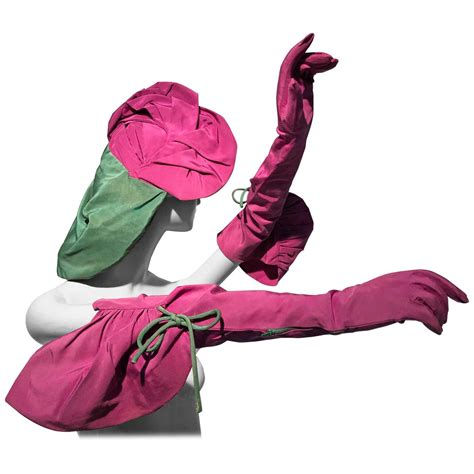
Sally Victor
Perhaps no hat is more closely associated with 1940s women's fashion today than the fedora. If recreating a 1940s day look most people would reach for a fedora and wear it perched jauntily on the head. Ingrid Bergman’s fedora in the 1942 movie, Casablanca, may have started the trend but the scarcity of materials as well as the menswear influence in clothing was a likely contributor to it’s popularity and iconic look.

This men’s staple was rebuilt and worn in a more feminine way usually with an emblematic 1940s tilt.

There was a very popular trend in reshaping a second hand men’s fedora into a ladies hat with steam, cutting and new decoration. Magazines and newspapers often printed varying instructions for these with minimal millinery skill required. This re-purposing could also make doll hats or something else entirely depending on the talent of the maker.
Professional milliners were tasked by clients to remake their husbands and fathers hats if time or skill wasn’t available. The lack of new materials in Britain kept this trend flowing for many years.

As the decade progressed, other silhouettes began to play with height, volume, and forward emphasis.
The pompadour hat, like the hairstyle, was popular from 1943 on-wards. The volume was at the top and forward. This shape was melded together with berets and other styles and veils were often attached to these.

This emphasis on forward volume extended into even more decorative interpretations and included the puff hat.

A large clutch of fluffy feathers dyed bright colours and sometimes mounted on a knit jersey fabric that covered the
head or had a snood attached or was worn with a snood or not at all.

The word “snood” can sound unfamiliar today. It has re-emerged in a modern form as the tubular scarves worn by skiers. But snoods essentially began as a hair covering from proto-Germanic societies many years ago. In the 1860s to recently, snoods were a way to contain the hair with crochet, knit or manufactured netting.

In the 1940s snoods were sometimes worn plain and paired with a hat or turban and sometimes with bows or flowers scattered over the net or placed at the top or sides. Snoods, worn with other hats or decorations was very common and since it contained the hair in a fashionable way, one could keep your brush-out neat and smooth while doing household chores, working or traveling.
The decorations weren’t always attached but pinned to the hair to aide in the needed versatility of the snood. The is one example of how practical, adaptable head wear shaped everyday fashion during this period.
By the end of the decade, fashion itself was beginning to shift once again, this time in a more dramatic direction.

In 1947 Christian Dior launched The New Look. A revolution in shape and construction of women’s’ clothes and a reaction to the restrictions of post war Europe.
It was a hyper feminine silhouette of volume at the hip and shoulder to create an hourglass shape. This return to the curvy shape from the late Victorians was almost shocking since that silhouette had been out of fashion for over 20 years.

To accentuate the shape, Dior introduced a line of large hats with shallow brims that repeated and complimented the New Look aesthetic and theory. The mushroom cap and squat bell shape hat with large down turned brims were made of stiff and textured straw and with fabrics on buckram frames instead of the softer straws formally in fashion before the war. They were decorated with plain ribbons without bows, tails or volume which emphasized the shape and construction of both the clothing and the hats. This departure from the exuberant and bright abundance of millinery decorations on popular hats was as provocative as the clothing.
His use of many yards of fabric as well as previously unavailable straw was a huge statement against the restrictions of materials still placed on Europe and England.

While Dior’s designs captured headlines and helped define the closing years of the decade, they represented only one part of the millinery world. The dramatic fashion of designers set the tone for high style, but it was interpreted very differently once it reached everyday life.
In communities across North America, hats continued to be made, altered, and sold by professional milliners working outside the great fashion houses. The skill of the milliner remained a valued part of everyday fashion. Even as the “Make Do and Mend” movement grew in popularity across Canada, milliners contributed to wartime style through creativity and innovation, reinventing traditional forms and developing new ones suited to changing times.

Most dress shops in nearly every town either employed a milliner to create hats to match their seasonal fashions or offered millinery services to customers, allowing older hats to be restyled or newly made in a way similar to tailoring. Dedicated millinery shops also remained an important part of the retail landscape, and the profession continued to be a viable trade throughout the decade.

This period may also have marked one of the last times when a majority of women between the ages of 21 and 40 still wore hats as a regular part of everyday dress, making hats not just an accessory but a visible and expected part of social appearance.
Because hats were so widely worn and so closely tied to everyday identity, they naturally carried meaning beyond their practical function.

Dior
Dior’s hats, however, moved away from traditional softness and instead embraced stiff, highly structured forms. They carried little to no decoration and were such a departure from the exuberant creativity of wartime millinery that they could feel both shocking and revolutionary. Dior’s look was at once ultra-feminine, modern, daring, and austere.
Dior’s work would go on to influence style well into the second half of the century, and his approach to hats helped quiet much of the decorative exuberance that had defined wartime millinery, permanently altering traditional silhouettes.


Comments